
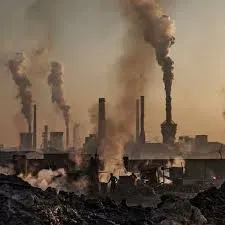
Understanding What “Peak Emissions” Means
When climate experts say that a country’s emissions have “peaked,” they mean that its annual greenhouse gas emissions have reached their highest point — and will begin to decline thereafter. Before the peak, emissions are still rising; after the peak, they start to fall.
The timing of that peak matters enormously. The earlier it happens, the less total carbon accumulates in the atmosphere — and the easier it becomes to keep global warming below 1.5°C. A delayed peak, on the other hand, means several more years of high emissions, which makes the world’s carbon budget tighter and the eventual cuts steeper.
What the New Data Show
A recent survey conducted by the Centre for Research on Energy and Clean Air and the International Society for Energy Transition Studies finds that most climate experts now expect China’s carbon emissions to peak later than previously forecast. Seven out of ten respondents predict China’s emissions will reach their maximum by the end of this decade, with 2028 emerging as the most likely year. Only one in five believe China has already peaked or will do so by 2025.
Last year, nearly half of experts expected the peak to come by 2025 — so this new forecast reflects a clear delay. The shift underscores the tension between China’s ongoing industrial growth and its massive but still maturing investments in renewable energy.
Why It Matters
China is the world’s largest single emitter of greenhouse gases. Its actions — or inaction — shape the world’s chances of meeting the Paris Agreement target of limiting global temperature rise to 1.5°C above pre-industrial levels.
The country’s new target, to lower emissions by 7–10% from their peak by 2035, represents progress but remains well below what’s needed to avert severe climate disruption. However, optimism persists: two-thirds of surveyed experts believe China may ultimately outperform its stated goal, given its rapid advances in solar, wind, and electric vehicle sectors.
Linking to the UN Agenda 2030 Goals
China’s emissions trajectory intersects directly with the United Nations 2030 Agenda for Sustainable Development, especially:
- Goal 7 (Affordable and Clean Energy): Expanding renewable capacity and reducing coal dependency.
- Goal 9 (Industry, Innovation, and Infrastructure): Transitioning heavy industry toward low-carbon systems.
- Goal 13 (Climate Action): Taking urgent measures to combat climate change and its impacts.
If China peaks in 2028 instead of 2025, those extra three years of emissions could significantly increase total global CO₂ output — narrowing the window for achieving Agenda 2030’s climate and energy goals.
A Critical Juncture for Global Sustainability
A delayed emissions peak is not just a statistic; it’s a signal of how difficult global decarbonization will be. Yet, it also highlights where the greatest potential lies. Should China accelerate its clean energy transition and exceed its reduction targets, the country could still help the world bend the curve back toward 1.5°C.
In short, a delayed peak is bad news for the planet, but how fast emissions fall afterward could still determine whether the world meets its sustainability milestones.
About the Author
Dr. Cezhan Ambrose is a post-doctoral researcher at Pepperdine University’s Graziadio Business School and founder of EnviroGov Solutions LLC. His research focuses on the intersection of corporate governance, environmental performance, and financial performance, exploring how transparent and accountable leadership can accelerate progress toward the corporate sustainability goals.


