
The question seems simple—how can we live well and preserve the planet? Yet, behind it lies the great paradox of our age: modern prosperity has been built on systems that degrade the very foundations of life—our soil, water, air, and climate.
The Heart of the Dilemma
For centuries, “living well” has been equated with material growth—more production, more consumption, more energy use. This model brought incredible innovation and lifted billions from poverty, but it also pushed planetary systems beyond safe boundaries. Today, the Earth is sending clear signals: intensifying heatwaves, depleted soils, vanishing species, and shifting weather patterns.
The challenge, then, is not to give up on living well—but to redefine what “well” means.
Redefining Prosperity
Real prosperity isn’t about endless accumulation. It’s about balance—a steady-state equilibrium between what we take and what the planet can renew. Living well means clean air, healthy communities, and meaningful work—not just higher GDP.
This balance can be guided by the concept of the replacement rate: using resources no faster than they can be naturally replenished. When we draw water from aquifers faster than rainfall refills them, or harvest forests faster than they regrow, we disrupt the replacement cycle—and the system becomes unstable.
The Principle of Equilibrium
In nature, equilibrium is the rule, not the exception. Every ecosystem maintains dynamic balance through feedback loops—predators and prey, plants and pollinators, carbon and oxygen cycles. When humans intervene without understanding these connections, we upset this equilibrium, often with unintended consequences.
To live well, we must rejoin this natural conversation—acting as participants, not dominators, in Earth’s complex system.
The Three E’s: Environment, Economy, and Equity
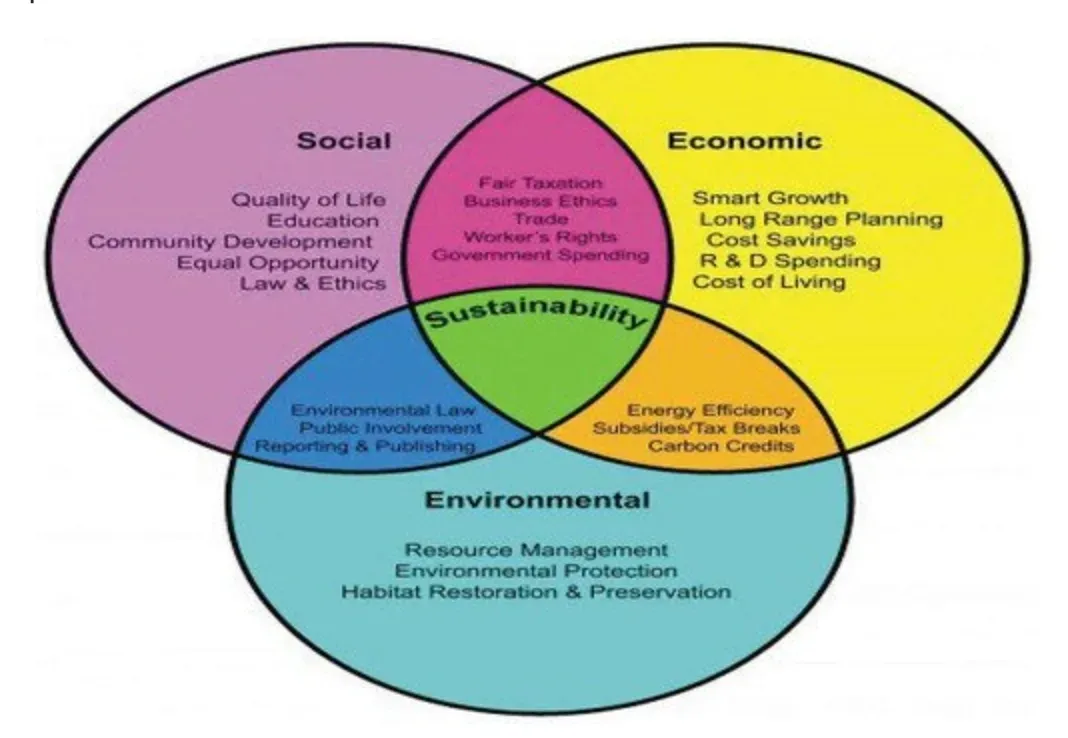
Sustainability is often explained through the Three E’s:
- Environment – protecting natural systems and biodiversity.
- Economy – designing markets that reward long-term stewardship, not short-term gain.
- Equity – ensuring all people share in prosperity and that the costs of environmental harm don’t fall on the most vulnerable.
When these three forces are aligned, they create a reinforcing loop: equitable societies invest in healthy environments, which in turn sustain resilient economies.
From Excess to Enough
At its core, sustainability asks us to confront excessive consumption—the idea that more is always better. Systems thinking shows us that consumption, production, and waste are not separate processes; they are connected flows. What we buy, eat, and throw away loops back into the system—into our soil, air, and oceans.
Living well, then, is about choosing enough. Enough energy, enough food, enough growth—guided by awareness, innovation, and compassion rather than greed.
A Systems View of Hope
When viewed through the lens of systems dynamics, the path forward is not about sacrifice—it’s about smarter design. Circular economies that eliminate waste. Regenerative agriculture that heals soil while producing food. Renewable energy systems that power progress without pollution.
Each of these shifts reflects the same insight: the planet already knows how to sustain itself. Our task is to align human systems with natural ones.
Living Well, Together
To live well without destroying the planet means embracing interdependence—between people and planet, present and future, self and system. It means realizing that every choice, every investment, every meal, every vote, participates in shaping the equilibrium of our shared home.
The good news? Once we see the connections, the solutions become clear.
Author Bio:
Cezhan Ambrose is a postdoctoral research scholar at Pepperdine University. His work explores the intersection of corporate sustainability, systems dynamics, and the evolving relationship between governance and environmental outcomes.


