

Systems Dynamics is an analytical framework that examines how complex systems evolve over time through interactions, feedback loops, time delays, and non-linear relationships. Rather than viewing global challenges as isolated problems, Systems Dynamics explores how causes and consequences are distributed across interconnected subsystems — economic, social, environmental, and institutional.
Developed in the mid-20th century by Jay Forrester and later applied in the Limits to Growth study at MIT, Systems Dynamics provides a structured way to model complexity. It reveals how feedback processes — both reinforcing and balancing — generate long-term patterns of behavior in systems such as populations, markets, ecosystems, and institutions.
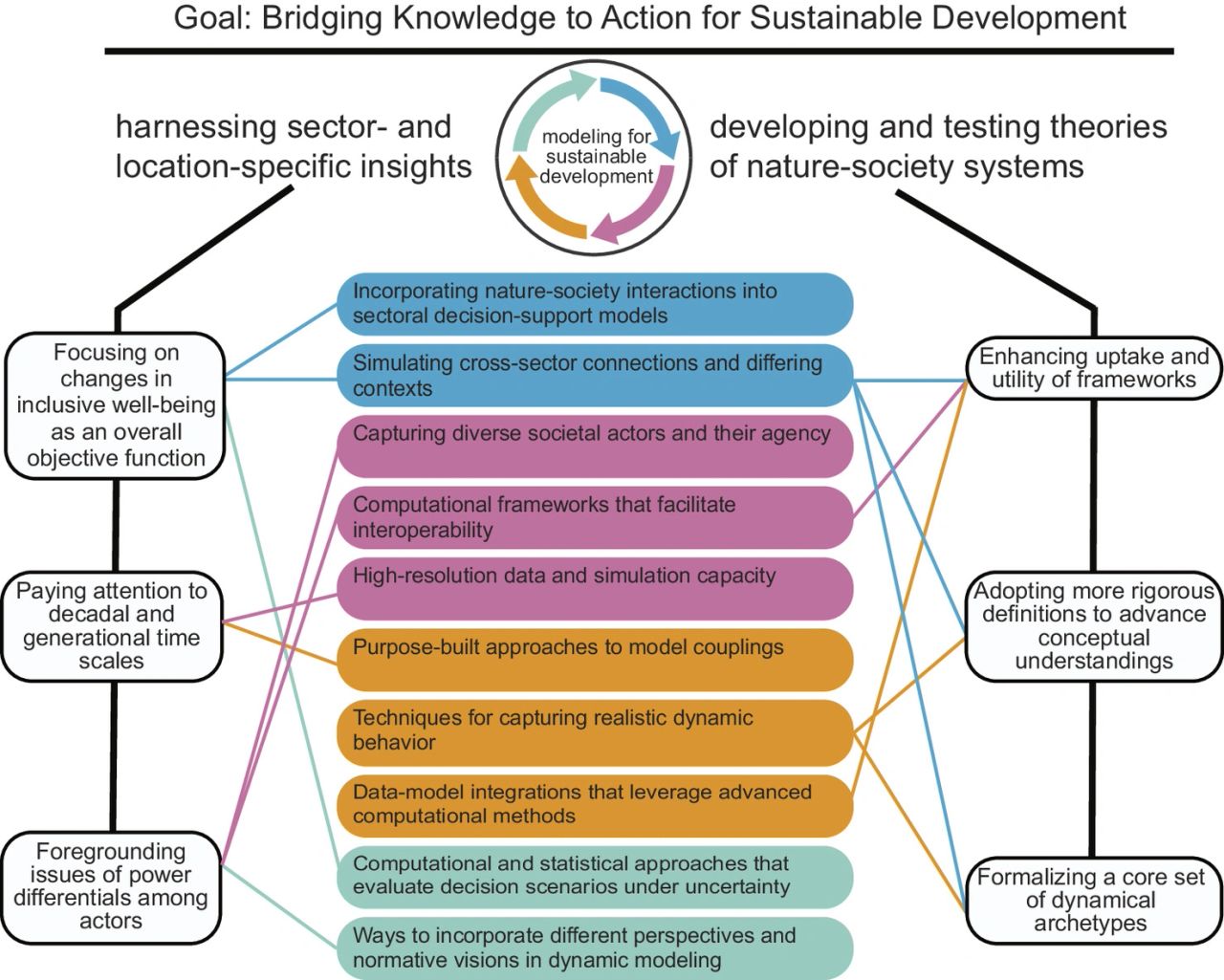
Image source: Selin, N. E., Giang, A., & Clark, W. C. (2023). “Progress in modeling dynamic systems for sustainable development,” Proceedings of the National Academy of Sciences. https://doi.org/10.1073/pnas.2216656120
Core Principles of Systems Dynamics
1. Interconnectedness of System Components
Systems Dynamics recognizes that no element of a system exists in isolation. For example, poverty, hunger, climate change, and governance reforms are not separate challenges; they are mutually reinforcing processes operating within a broader social–ecological system. Addressing one requires understanding its effects on others.
2. Feedback Loops and Ripple Effects
A small intervention in one part of a system can trigger unexpected reactions elsewhere. Reinforcing loops amplify trends (e.g., education improving income, which funds more education), while balancing loops stabilize or constrain growth (e.g., resource depletion reducing economic expansion). These feedbacks explain why progress toward the SDGs can accelerate or stall.
3. Leverage Points and Trade-offs
Systems Dynamics helps identify leverage points — locations in the system where small policy or governance changes can produce outsized results. It also highlights trade-offs: progress in one domain may undermine another if feedbacks are ignored. For example, industrial growth can promote jobs but exacerbate inequality or emissions without systemic safeguards.
4. Temporal Delays and Long-Term Change
Time delays are intrinsic to complex systems. The impact of governance reforms or environmental investments often unfolds gradually, sometimes over decades. Systems Dynamics models allow decision-makers to anticipate lagged effects and avoid prematurely abandoning effective long-term interventions.
5. Structural Causality
In Systems Dynamics, structure drives behavior. The configuration of feedback loops, information flows, and incentives within a system largely determines its outcomes. Thus, even well-intentioned policies can fail if the underlying institutional or economic structures remain unchanged.
Why Systems Dynamics Matters for the UN Sustainable Development Goals (SDGs)
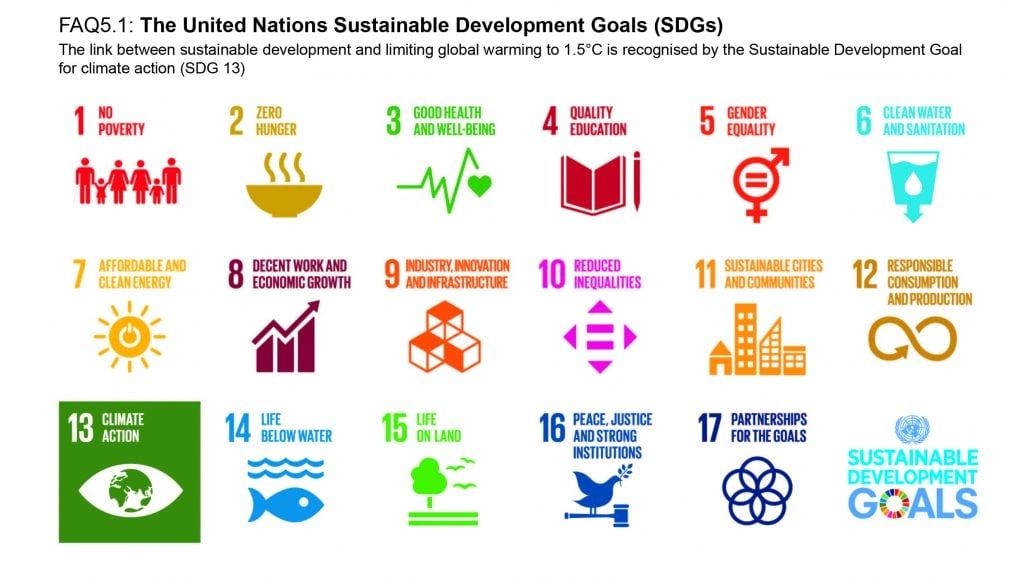
The 17 SDGs form an integrated network of global objectives — encompassing poverty, health, education, energy, and climate action. Because these goals are inherently interconnected, progress depends on understanding how changes in one domain influence others. Systems Dynamics offers a method to visualize and quantify these interdependencies.
Uncovering Synergies:
By mapping interactions between goals, Systems Dynamics reveals positive feedbacks. For instance, investments in renewable energy (SDG 7) reduce emissions (SDG 13), which improves public health (SDG 3) and fosters resilient communities (SDG 11).
Exposing Trade-offs:
Conversely, rapid industrialization (SDG 8) may increase inequality or degrade ecosystems unless regulatory and governance mechanisms counterbalance its effects. Systems Dynamics makes these tensions explicit, allowing policymakers to manage growth sustainably.
Avoiding Linear “Quick Fixes”:
Linear solutions — such as injecting short-term funding into social programs — often fail to address underlying systemic causes. Systems Dynamics identifies the reinforcing cycles (e.g., education, income, and governance quality) that must shift to achieve durable progress.
Managing Complexity and Uncertainty:
The global system is dynamic and adaptive. Shocks such as pandemics, conflict, or climate disruptions can ripple across SDG domains. Systems Dynamics modeling, including integrated simulation tools like the iSDG model, helps decision-makers anticipate cascading effects and test policy scenarios before implementation.
Key Systems Dynamics Mechanisms in the SDG Context
1. Feedback Loops (Reinforcing and Balancing)
- Reinforcing: Improved education → higher productivity → higher income → more education — a virtuous growth cycle.
- Balancing: Increased consumption → resource depletion → economic slowdown — a self-correcting mechanism.
In SDG applications, these loops explain why progress in clean energy (SDG 7) can strengthen multiple goals, while weak regulation or extractive industries can produce negative feedbacks that erode environmental and social gains.
2. Time Delays
Transformational change takes time. For instance, reforms to strengthen corporate governance may only translate into improved environmental outcomes after years of implementation. Recognizing such delays prevents premature policy reversal and encourages sustained investment.
3. Non-linearity and Emergence
Systems rarely respond in proportion to inputs. A modest intervention may yield exponential benefits if it disrupts a reinforcing loop, while massive investment may have little impact if system barriers persist. Non-linearity underscores the need for adaptive policy design.
4. Structural Drivers
Outcomes stem from system architecture: information flows, incentive structures, power relationships, and institutional coherence. Without altering these foundations, even well-funded programs risk reproducing existing patterns of inequality or unsustainability.
5. Leverage Points
Strategic interventions at leverage points — such as transparency, accountability, or education — can shift entire system trajectories. In governance contexts, enhancing board independence or ESG-linked incentives can create reinforcing cycles of trust, innovation, and sustainability performance.
Systems Dynamics and Corporate Governance for the SDGs
In organizational settings, Systems Dynamics provides a powerful lens for linking corporate governance to environmental and social outcomes.
- Governance as a System Enabler: Effective boards, accountability, and stakeholder transparency act as positive feedback mechanisms. They enhance trust, attract investment, and promote innovation in sustainable technologies — improving both firm performance and societal outcomes.
- Reinforcing and Balancing Loops: Weak oversight can create negative loops — poor environmental performance leading to controversy, reputational decline, and financial constraints — whereas strong governance reverses that dynamic.
- Trade-offs and Incentives: Systems Dynamics helps identify where financial incentives or regulatory constraints create short-termism. By redesigning feedback structures (e.g., linking compensation to ESG outcomes), firms can align long-term profitability with SDG progress.
- Cross-System Effects: Corporate governance reforms influence broader systems — investor expectations, supply chains, and policy norms — amplifying their SDG impact at national and global scales.
Concluding Reflections
Systems Dynamics reframes how we understand progress toward the Sustainable Development Goals. It moves the discussion from isolated metrics to dynamic interdependencies — capturing how feedbacks, structures, and time lags drive real-world outcomes.
For policymakers, investors, and researchers, the lesson is clear: sustainability cannot be engineered through static plans or linear forecasts. It emerges from the continuous interaction of social, economic, and ecological systems — a living process that must be guided, measured, and adapted over time.
As the 2030 deadline approaches, applying Systems Dynamics to governance, finance, and policy is no longer optional. It is essential for translating global ambition into systemic change.
About the Author
Dr. Cezhan Ambrose, DBA is a Post-Doctoral Research Scholar at Pepperdine University and a finance lecturer specializing in corporate governance, ESG integration, and sustainable investment strategy. His work examines how data-driven governance and environmental performance can enhance long-term financial returns.


